

It is an established fact that development in Africa has consistently suffered setbacks due to instability in leadership. Political manipulation has deeply affected the working class, limiting their capacity to provide basic daily needs. In an attempt to control public sentiment, empowerment programmes are often introduced by political elites not necessarily to create lasting solutions, but to reduce tension and advance personal or political interests. Unfortunately, the working class frequently embraces these programmes out of desperation, lack of confidence, and the absence of sustainable income opportunities.
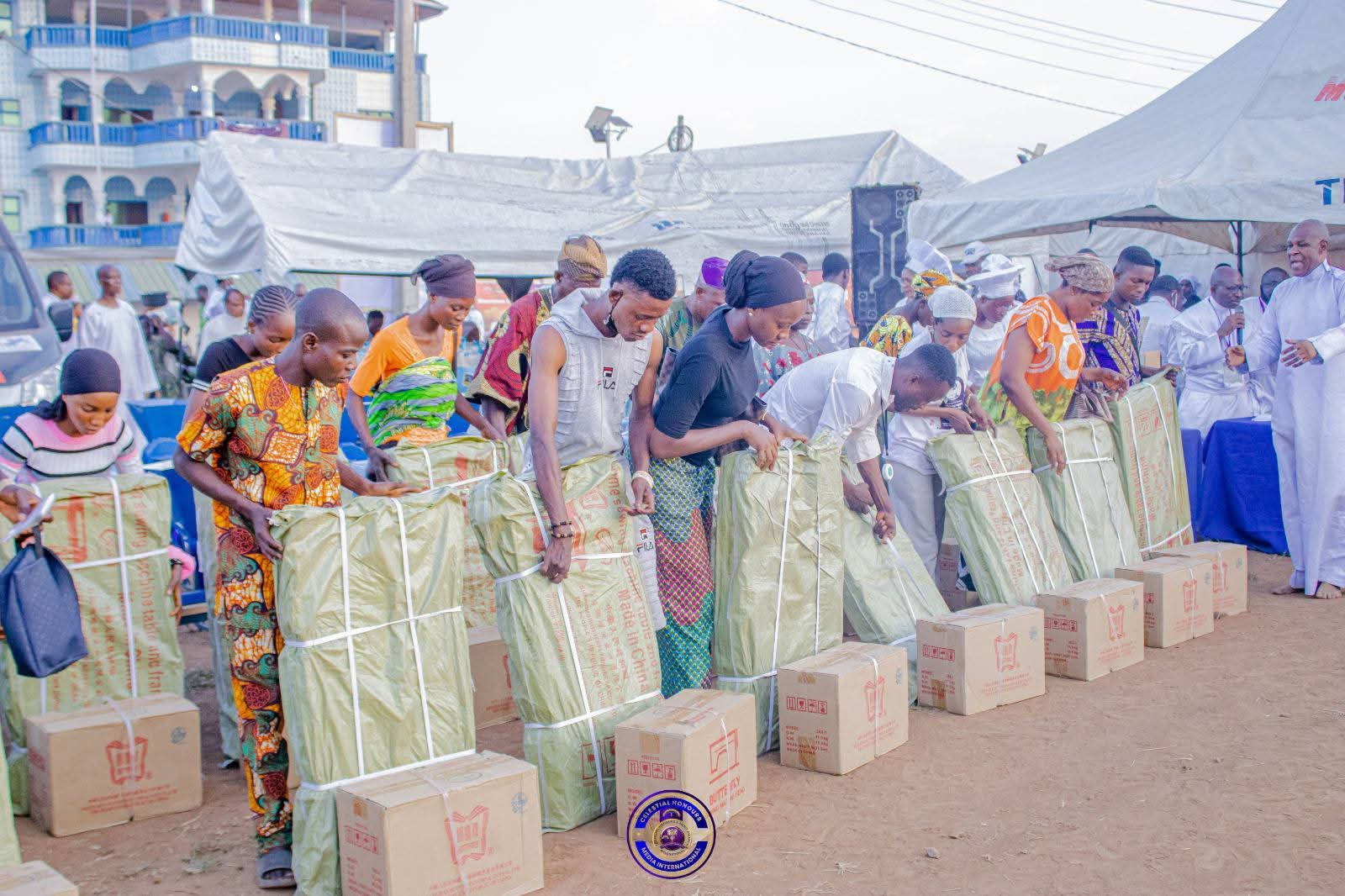
When this theory is applied to our Church structure, it becomes clearer. The Imeko Convocation Committee introduced a Welfare Committee as a subcommittee to provide empowerment packages for indigenes residing at the Church World Headquarters in Imeko, Ogun State. This initiative appears to stem from the reality that Imeko, as a town, relies almost entirely on the Church’s presence as its primary driver of development. The majority of the indigenous population are farmers, while the Ogun State Government has failed to adequately provide modern infrastructure such as schools, road networks, communication systems, and healthcare facilities.
However, a critical question must be asked: Do Imeko indigenes truly need empowerment packages from the Celestial Church of Christ?
My answer is a resounding NO.
What Imeko genuinely needs from the Church is infrastructure-driven development, not temporary empowerment handouts. The town needs long-term investments such as the establishment of universities, construction of parish houses, and strategic investments in real estate and other productive ventures. These initiatives would create sustainable employment opportunities for the sons and daughters of Imeko, rather than the periodic distribution of pepper-grinding machines, hair-cutting equipment, or cash gifts during annual Convocations, an approach that mirrors Nigerian politicians who remember their people only during election seasons.
By adopting empowerment schemes for Imeko indigenes, the Convocation Committee has failed to pursue the primary vision of our Pastor Founder, Reverend Samuel Bilehou Joseph Oshoffa. In a widely circulated video during the commissioning of Imeko in 1981, Papa clearly declared that Imeko would host universities, an airport, and other major infrastructural developments. Sadly, internal disputes and divisive elements within the Church have stalled this divine vision and hindered the fulfilment of Papa’s dream for Imeko.
Papa, forgive us not because we are weak, but because we chose comfort over courage.
Furthermore, considering the current economic realities in Nigeria, it is important to ask another hard question: Do the members across various parishes who contribute the funds used by the Imeko Convocation Committee not deserve empowerment in their own local communities as well?
True empowerment is not charity.
True empowerment is DEVELOPMENT OF IMEKO TOWN.
And development begins with vision, infrastructure, and sustainability not temporary relief.